Selected:

Almasol® Proprietary Solid Additive…

Almasol® Proprietary Solid Additive Technology

Almasol® Provides Anti-Wear & Extreme Pressure Protection

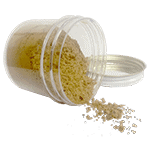
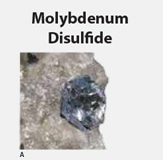
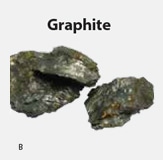
Almasol® is Lubrication Engineers proprietary solid film additive originally developed for use in the late 1950s. This soft, tan powder has been incorporated into many of LE’s industrial lubricating oils and greases. The microscopic particles are so small it would take approximately 8,000 of them to cover the punctuation mark at the end of this sentence. So revolutionary in its development, a form of Almasol®’s dry film technology has been used on every manned U.S. space flight until the retirement of the space shuttle program. Unlike molybdenum disulfide and other solids used in lubricants, Almasol® will not build up on itself and adversely affect machine operation with close tolerances or create hard deposits that create housekeeping issues. Unlike graphite – a commonly used solid lubricant – Almasol® maintains its lubricity even under vacuum conditions. That’s why it functioned so well in space programs.

How Almasol® Works

Lubrication is accomplished by providing a lubricant film between two opposing metal surfaces. Under light to moderate load and sufficient speeds, lubricants of the proper viscosity provide the desired film strength. As load, speeds and temperatures increase and or decrease through operation the oil film alone can become insufficient to prevent galling, scoring, wear, friction and high temperatures as metal-to-metal contact occurs. This is where Almaso®l excels in protecting equipment.

Think of Almasol® particles as small uniform microscopic platelets. They form a single protective sacrificial layer over a metal’s working surface because they have a natural affinity for metal, maintaining an even dispersion throughout the lubricant fluid. Almasol® will not build up on itself because the particles are mutually repelled. When equipment is operating, Almasol® particles will slide on each other to inhibit metal-to-metal contact. If a single particle is worn away, another particle takes it place, constantly protecting the metal surface.


Proprietary

Almasol® additive technology is used exclusively in LE lubricants, helping our customers worldwide protect their equipment, and experience longer lubricant intervals, fewer part replacements and less downtime.

Beneficial Qualities for Almasol®

  • Deposits a sacrificial layer on metal surfaces
  • Will not build up on itself
  • Remains stable even in extreme heat conditions
  • Reduces heat by minimizing friction
  • Provides extreme pressure (EP) protection
  • Provides anti-wear (AW) protection

    Almasol® Outperforms Conventional Solid Additives

    Solid Additive Maximum Service Temperature Load Carrying Capacity Acid Resistance Drawbacks When Used in Industrial Lubricants
    Almasol Comparison Chart 1,038°C(1,900°F) 400,000 psi
    (28,123 kgf/cm2)
    Inert None
    Almasol Comparison Chart 343°C(650°F) 400,000 psi
    (28,123 kgf/cm2)
    Some Oxidizes in air above 343°C (650°F),forming abrasive molybdenum trioxide. Tendency to build up on itself, affecting machinery with close tolerances. Cannot tolerate hydrochloric and nitric acid, especially when heat, water and air are present.
    Almasol Comparison Chart 426°C(800°F) 80,000 psi
    (5,625 kgf/cm2)
    Some Known to exhibit galvanic corrosion problems. Tendency to build up on itself, affecting machinery with close tolerances.
    Almasol Comparison Chart 260°C(500°F) 5,000 psi
    (352 kgf/cm2)
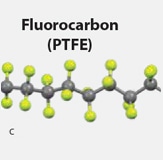
    Inert No load-carrying capability. Tendency to build up on itself, affecting machinery with close tolerances.

Products Containing Almasol®

More Exclusive Additives

Related Articles

Lubrication technician performing machinery lubrication training at an industrial plant
News

Investment in Training Is Key to the Lubrication Industry

Lubrication management has grown more sophisticated in recent years, with plants having access to better products, smarter monitoring tools and more advanced storage and dispensing systems. Yet equipment failure rates linked to lubrication problems remain stubbornly high. According to Colin Ford, Managing Director of Lubrication Engineers (LE) South Africa, the reason for this is that technology can only

Read More »
Easy Bar rotary kiln lubrication applied to kiln tyre and shell interface in an industrial plant
News

Easy Bar Helps Extend Rotary Kiln and Dryer Lifespan

Rotary kilns and dryers operate under extreme heat and heavy continuous loads, often with persistent vibration. Inside the kilns, the interface between the kiln tyre and the shell is one of the most critical lubrication points on the machine – a key piece of machinery in cement production, lime calcining, mineral processing and chemical manufacturing. This means that finding the

Read More »
Lubricant Contamination
News

Lubricant Contamination Costs More Than You Think

Industrial maintenance teams know that proper lubrication is critical to equipment performance. What many don’t realise is that the battle for equipment longevity and efficiency is often lost before the lubricant ever touches the machine.  Lubrication Engineers (LE) South Africa has identified that 90% of lubrication contamination happens during storage and dispensing

Read More »
Wire Rope Lubricator: Efficient Wire Rope Maintenance & Safety
News

Wire Rope Lubrication: A Key Component for Longevity

As part of its extensive work to help develop benchmarking standards for wire rope lubrication in South Africa, lubrication specialists Lubrication Engineers (LE) South Africa has found the Viper wire rope lubricator to be a key element for effective lubrication application and rope maintenance.   Designed and manufactured in Australia over 15 years ago, the Viper was initially

Read More »
×

Cart